
Carpentry & joinery · North Devon
Carpentry that's cut, fitted and finished by a City & Guilds qualified tradesman.
From a roof cut on site to the doors, skirting and stairs that finish a room, carpentry is the trade that either makes a house feel solid or gives away every shortcut taken elsewhere. We carry out carpentry as part of our building projects, led by Lewis, City & Guilds and NVQ qualified, and backed by a 12-month no-quibble workmanship guarantee.
Established 2020 · £5m public liability · City & Guilds qualified carpenter · 12-month guarantee
- City & Guilds & NVQ qualifiedLewis leads all first and second fix carpentry
- Roofs cut on siteTraditional cut roofs, not just trussed kits
- £5m public liabilityPlus £10m employers' liability cover
- 12-month guaranteeNo-quibble workmanship cover after completion
- Owner project-managedAdam Harrison oversees every job on site
Service overview
What our carpentry work covers
Carpentry runs through nearly every job we do, from the structural timber that holds a roof up to the skirting board that finishes a room. We split it the way the trade does: first fix, which is structural and hidden, and second fix, which is what you actually see and touch.
First fix carpentry is roof structures, floor joists, stud partitions, door linings and structural openings: the timber that has to be right before anything else can happen, because plastering, tiling and decoration all depend on it. On new builds and extensions we cut roofs on site rather than relying solely on pre-made trusses, which lets us handle vaulted ceilings, dormers and awkward junctions that a standard truss pack cannot.
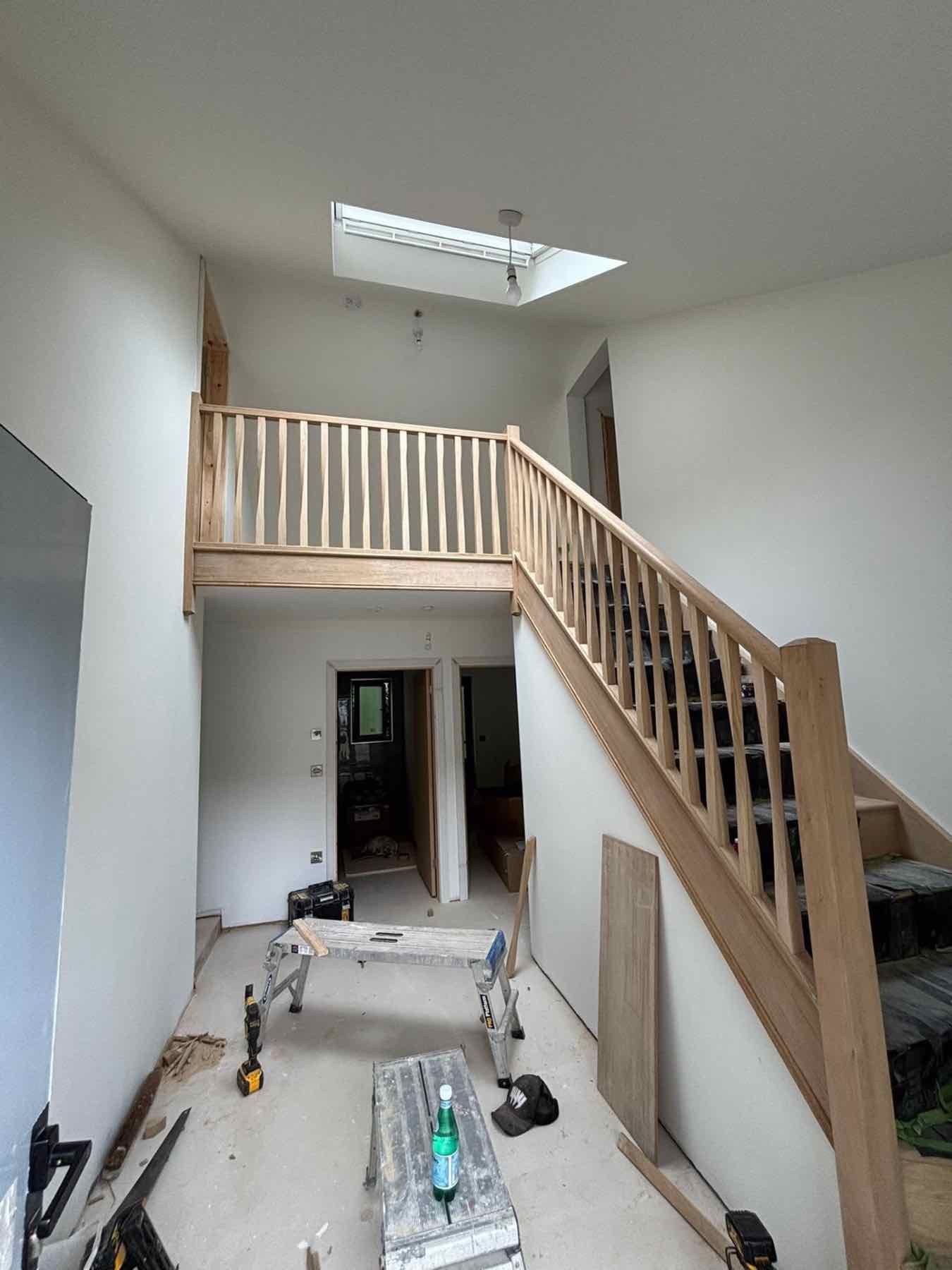
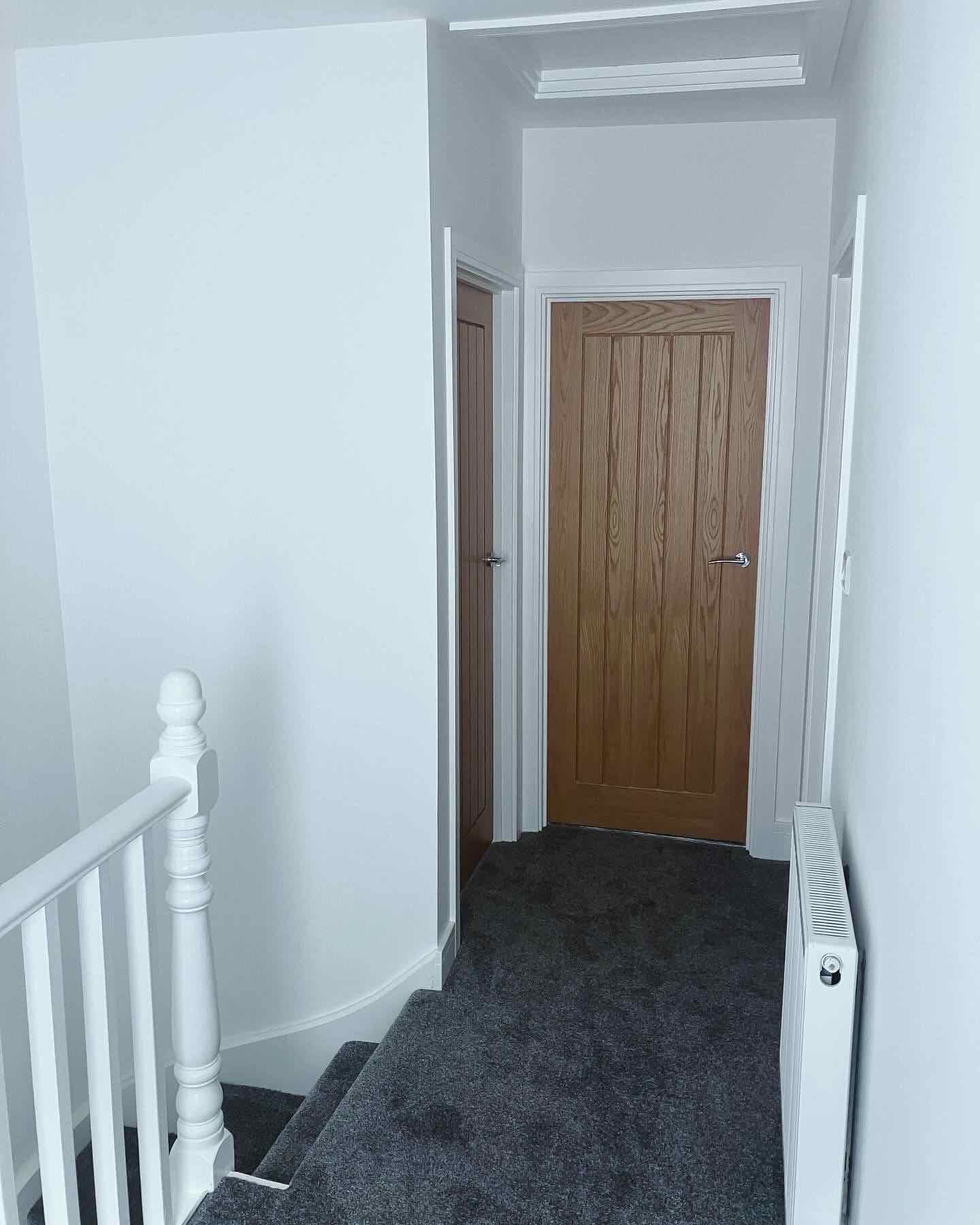
Second fix is the finishing carpentry: internal doors, architrave, skirting, stairs and built-in joinery where a project calls for it. This is the work that gets looked at closely, every mitre, every gap, every hinge, and it is where a qualified carpenter's training actually shows, because there is nowhere to hide a poor cut.
Structural timber work also covers repairs: replacing rotten joists, strengthening floors before a loft conversion, fitting steel or timber beams where a wall comes out, and rebuilding roof structures damaged by long-term leaks. This kind of work is rarely straightforward, because you are usually working around an existing building rather than starting with a clean slate, and it needs someone who understands loads, not just how to cut a straight line.
- Who it is forHomeowners having an extension, renovation or new build carried out who want the first and second fix carpentry done by a qualified carpenter as part of the same job, plus anyone with a structural timber problem uncovered during that work: sagging floors, a bowed ridge, rot in a roof structure.
- When you need itFirst fix carpentry has to happen at the right point in a build programme, before plastering. Second fix follows once the walls are finished, and both are sequenced as stages within your wider project.
- Why a qualified carpenter mattersA door lining fitted slightly out of plumb, a staircase built to the wrong going and rise, or a structural opening formed without the right support are not cosmetic problems; they affect how a house is used every day and, in the case of structural work, whether it is safe.
What it costs to get wrong
What goes wrong with carpentry done badly
Carpentry mistakes are some of the most visible in a house, because you touch a door handle or walk up a staircase every single day. They are also some of the most expensive to unpick once plaster and decoration have gone over the top.
Structural openings without proper support
Taking out a stud wall or forming a new opening without the right lintel or beam sized for the load above it can lead to cracking, sagging floors above, or worse. This needs calculating properly, not judged by eye.
Doors and linings fitted out of square
A door lining fixed even slightly out of plumb means the door binds, the gaps run uneven, and no amount of adjusting the hinges fully fixes it. It has to be right before plaster goes on, because by then it is a much bigger job to correct.
Staircases that don't meet building regulations
Rise, going, headroom and handrail height are all regulated, not just a matter of preference. A staircase built to look right but not measured against the regs can fail building control and need rebuilding.
Roof timbers cut without allowing for loads
A roof structure carries not just its own weight but tiles, insulation, wind and snow loading. Undersized rafters, missing struts or purlins not properly supported show up as sagging ridgelines and cracked ceilings years later.
Rot and movement ignored rather than fixed
Sagging floors or a slightly springy staircase are often symptoms of a timber problem underneath, not a fault with the finish. Covering it over with new flooring or carpet without investigating just delays a more expensive repair.
How the job runs
From first visit to final snag
- 01
Site visit and free estimate
We look at the job in person, whether it is a full first fix package on an extension or structural timber repair as part of a renovation, and give you a free, honest ballpark figure.
- 02
Detailed quote
A full itemised quote is produced for a fee, refunded in full if you proceed, setting out materials, timescales and what is included.
- 03
First fix or structural work
Roof structures, floor joists, stud walls, structural openings and door linings, sequenced to fit around plastering and other trades where relevant.
- 04
Second fix carpentry
Doors, architrave, skirting and stairs installed to a finish-ready standard, led by our City & Guilds qualified carpenter.
- 05
Snagging and handover
We walk the finished work with you, address anything that isn't right, and hand over with our 12-month no-quibble workmanship guarantee.
Why us
What you get by building with us
Qualified, not just experienced
Lewis holds City & Guilds and NVQ carpentry qualifications, which means the training behind every joint and cut is verifiable, not just claimed.
Roofs cut on site
Where a design calls for something other than a standard trussed roof, we cut it on site, vaulted ceilings, dormers and non-standard pitches included.
Structural work properly assessed
Openings, beams and load-bearing repairs are sized correctly, using an established structural engineer where the work requires calculations.
One trade, consistent standards
The same carpenter working first and second fix means tolerances match throughout: door linings suit the joinery that follows, not fitted to a different standard.
Backed by a proper guarantee
A 12-month no-quibble workmanship guarantee and £5m public liability cover mean the work is protected after we leave, not just while we're on site.
Owner-managed jobs
Adam Harrison project-manages every job, so a standalone carpentry project gets the same oversight as a stage within a much bigger build.
In detail
Carpentry detail: first fix, second fix and structural repairs
Carpentry covers a wide range of work, and the detail changes depending on whether you're building new, extending, renovating, or simply fixing a problem with existing timber.
First fix carpentry
First fix covers everything structural and hidden: roof structures, floor joists and decking, stud partition walls, and door linings set ready for plastering. Getting this stage right is what determines how straightforward every following trade's job is: a stud wall built out of square makes tiling and plastering harder, and a floor not level enough will show under every finish laid on top.
Roof structures are either cut on site or built from trussed sections, chosen against the design. Vaulted ceilings, dormer windows and rooms in the roof usually need a cut roof, because standard trusses don't give the internal space those designs need. Structural timber sizes are checked against span tables or an engineer's calculations, not guessed from experience alone.
Second fix and finishing joinery
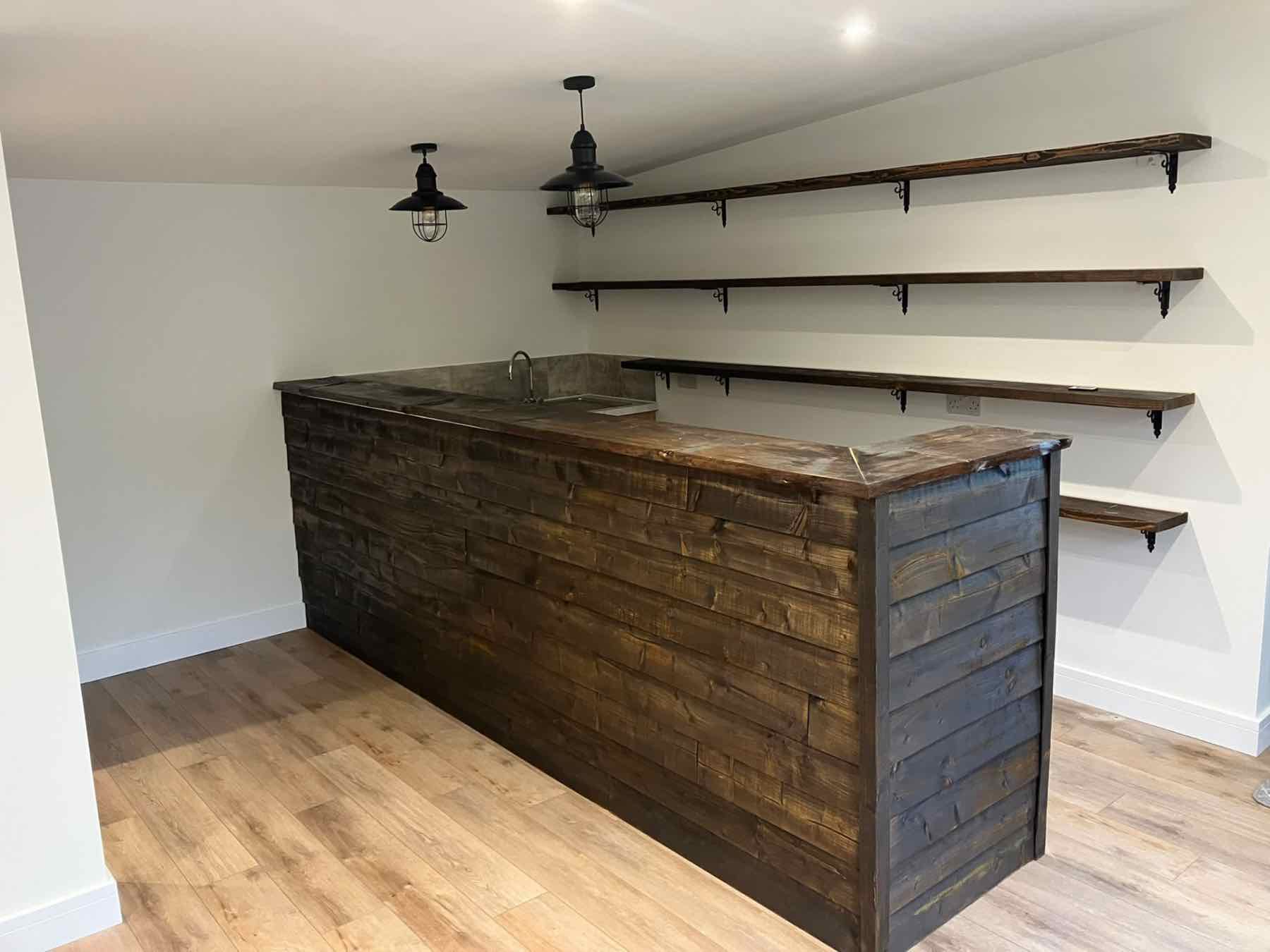
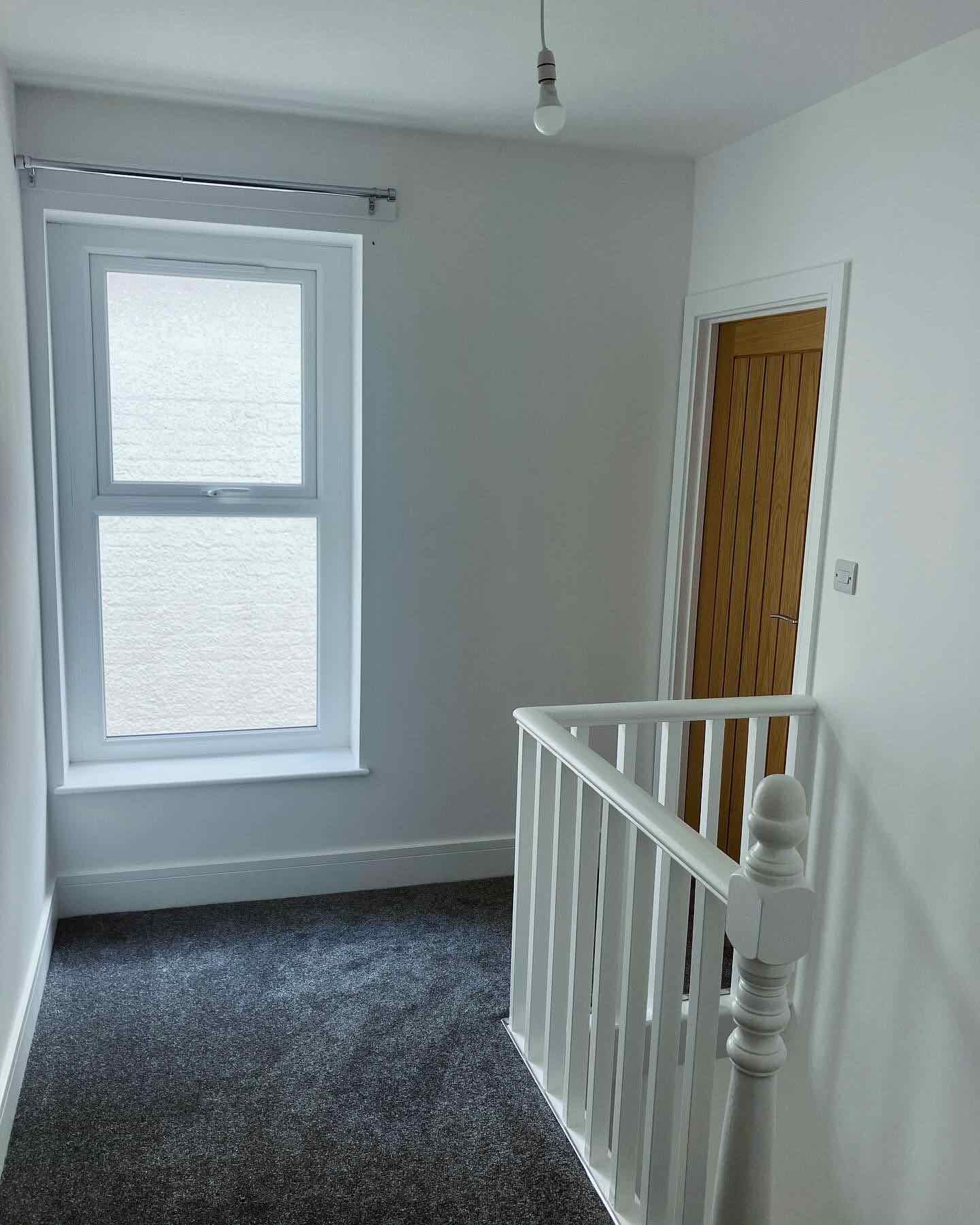
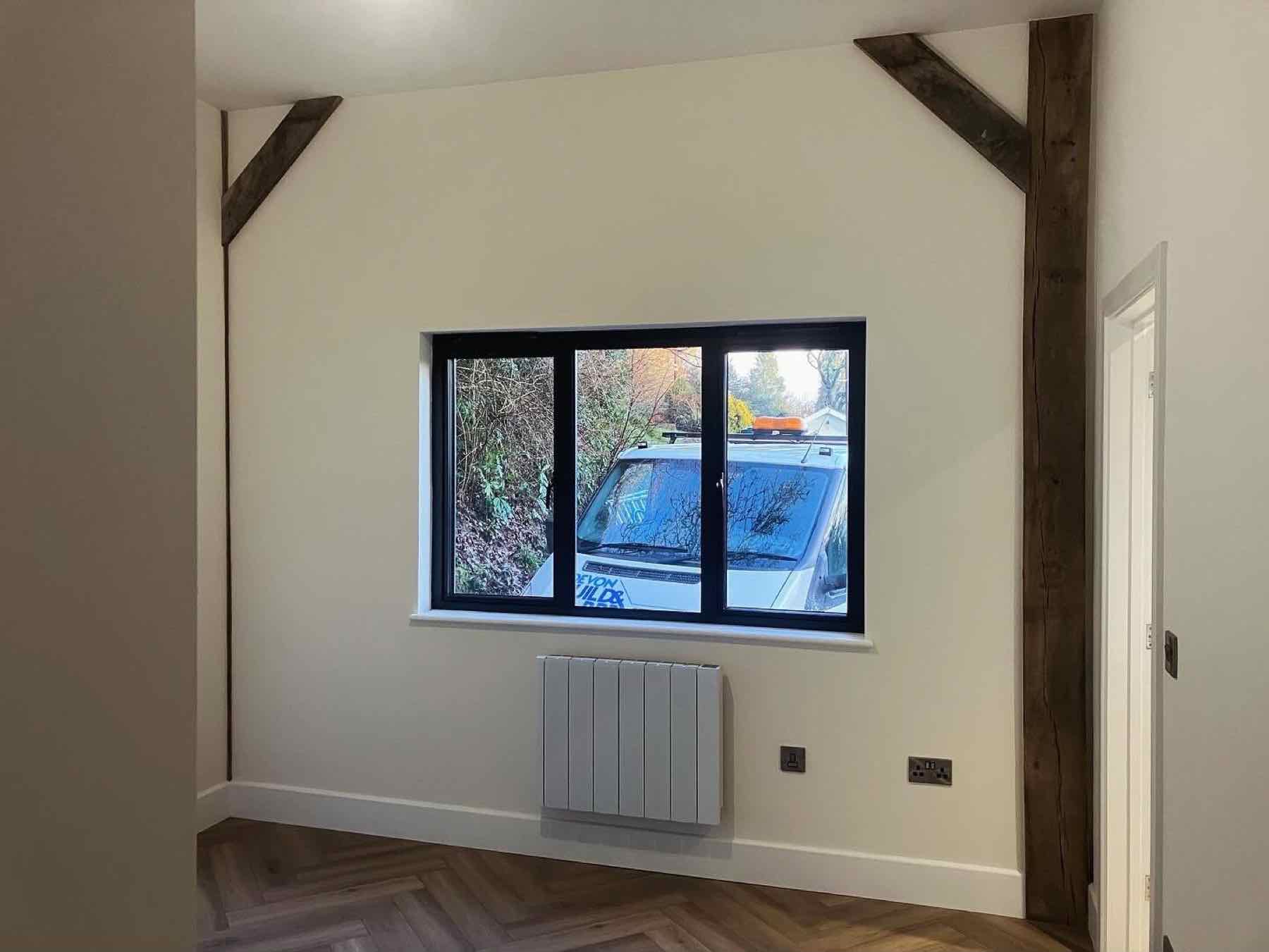
Second fix is what you see: internal doors hung and finished, architrave and skirting fitted with tight mitres, stairs built or refurbished, and built-in joinery such as alcove shelving where the project calls for it.
This stage is judged on close inspection, and it's where a carpenter's qualifications actually matter: consistent mitres, doors that hang true and close properly, skirting scribed to an uneven wall rather than gapped and filled. Built-in joinery is made to the exact dimensions of your space, which means it fits properly rather than being adapted to fit.
Staircases
Staircases are one of the most regulated pieces of carpentry in a house: rise, going, headroom, handrail height and baluster spacing are all set out in building regulations, not just a matter of what looks good. A new staircase, or a replacement for an existing one, is designed to meet those regulations first and your preferences on finish and style second.
Existing staircases can often be refurbished rather than replaced: new treads, risers and handrails fitted over a sound structure, which is considerably cheaper than a full replacement where the frame underneath is solid.
Structural timber and beam work
Forming a new opening in a load-bearing wall, removing a chimney breast, or converting a loft all rely on structural timber or steel being sized correctly for the load above. We work with an established structural engineer where calculations are needed, and the resulting beam or lintel is installed properly supported at each end, not just wedged into an opening.
Floor strengthening is common ahead of loft conversions or where existing joists are undersized for a new use: extra joists, engineered timber, or steel flitch plates bolted alongside existing timber are all options depending on the span and the load.
Rot, movement and repairs
Sagging floors, springy staircases, or a dip in a roofline are usually a sign of timber that has moved, rotted, or was undersized in the first place. Diagnosing the actual cause, a leaking gutter feeding rot into a wall plate, or a joist simply not big enough for its span: matters more than covering the symptom.
Repairs range from replacing individual rotten sections with treated timber spliced into sound material, through to rebuilding whole sections of roof or floor structure. Where rot has spread from a leak, the source of the water has to be fixed first, or the repair won't last.
Questions
Straight answers before you commit
If your question isn't here, ring Adam directly; you'll get the same straight answer on the phone.
Do you do standalone carpentry jobs, or only as part of a bigger build?
Our carpentry is carried out as part of our building work: extensions, renovations and new builds. We are not a standalone bespoke joinery workshop, so we do not take on one-off staircases or fitted furniture as a service on their own.
Can you cut a roof on site rather than using trusses?
Yes. Where the design needs a vaulted ceiling, dormer windows, or a room in the roof, we cut the roof structure on site to suit, rather than relying only on pre-made trusses.
Is your carpenter actually qualified, or just experienced?
Lewis, who leads our first and second fix carpentry, holds City & Guilds and NVQ carpentry qualifications, alongside years of practical experience.
Can you deal with the staircase as part of a renovation or extension?
Yes, where stairs form part of the wider project. They are built to meet building regulations for rise, going, headroom and handrail height, and to fit the actual dimensions of your stairwell.
What causes a sagging floor or staircase?
Usually either undersized timber for the span, rot from a long-term leak, or movement in the structure below. We diagnose the cause before pricing a repair, because covering the symptom without fixing the source doesn't last.
Do you handle structural work like removing a chimney breast or forming a new opening?
Yes, working with an established structural engineer where calculations are needed, and installing the resulting beam or lintel properly supported at each end.
Can you fit built-in joinery during the works?
Where it forms part of a renovation or extension we are already carrying out, yes. We do not offer bespoke fitted furniture as a standalone service.
How much does carpentry work cost?
It depends heavily on the scope, from a single door to a full first and second fix package. The initial estimate is free; a detailed itemised quote carries a fee, refunded in full if you proceed.
Do you offer any guarantee on carpentry work?
Yes, all our carpentry is covered by our 12-month no-quibble workmanship guarantee, and we carry £5 million public liability insurance.
Which areas do you cover for carpentry?
We're based at Langtree near Great Torrington and cover North Devon, including Bideford, Barnstaple, Holsworthy, Hatherleigh, Winkleigh and Braunton.
Related work
Other trades we cover in-house
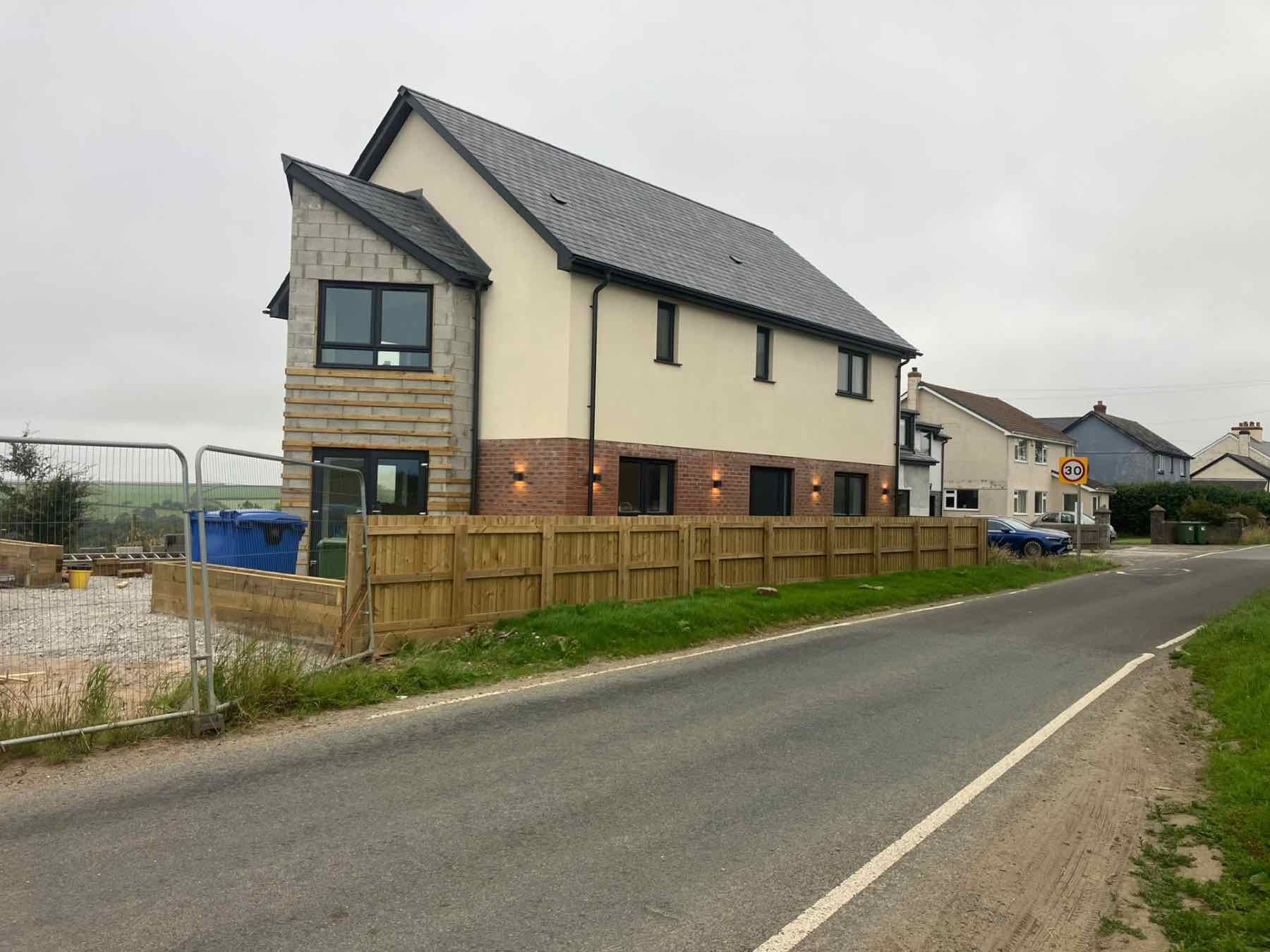
New Builds
Ground-up homes for private clients, with a 10-year structural warranty.
View service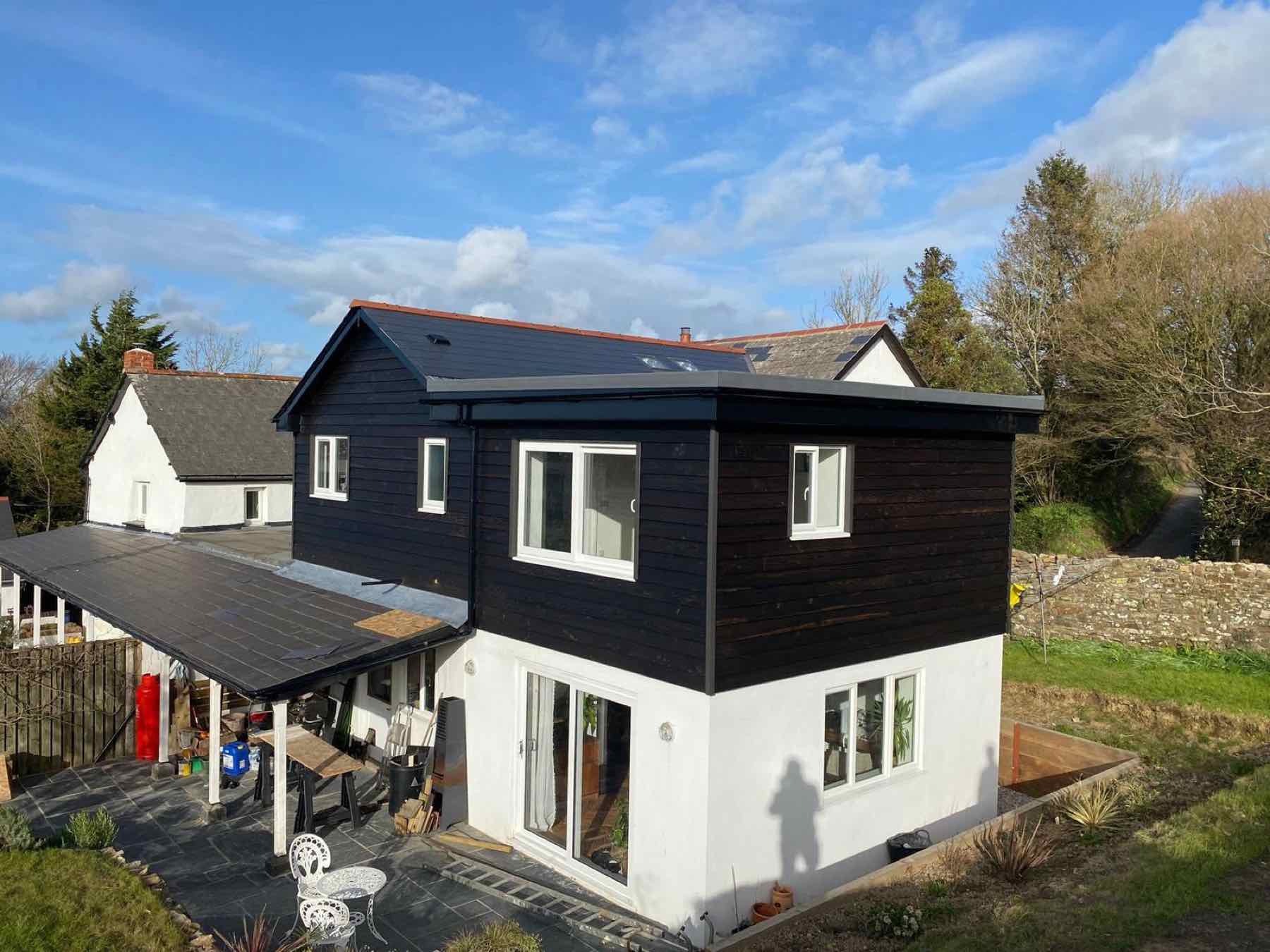
Extensions
Single and two-storey extensions, structural work included.
View service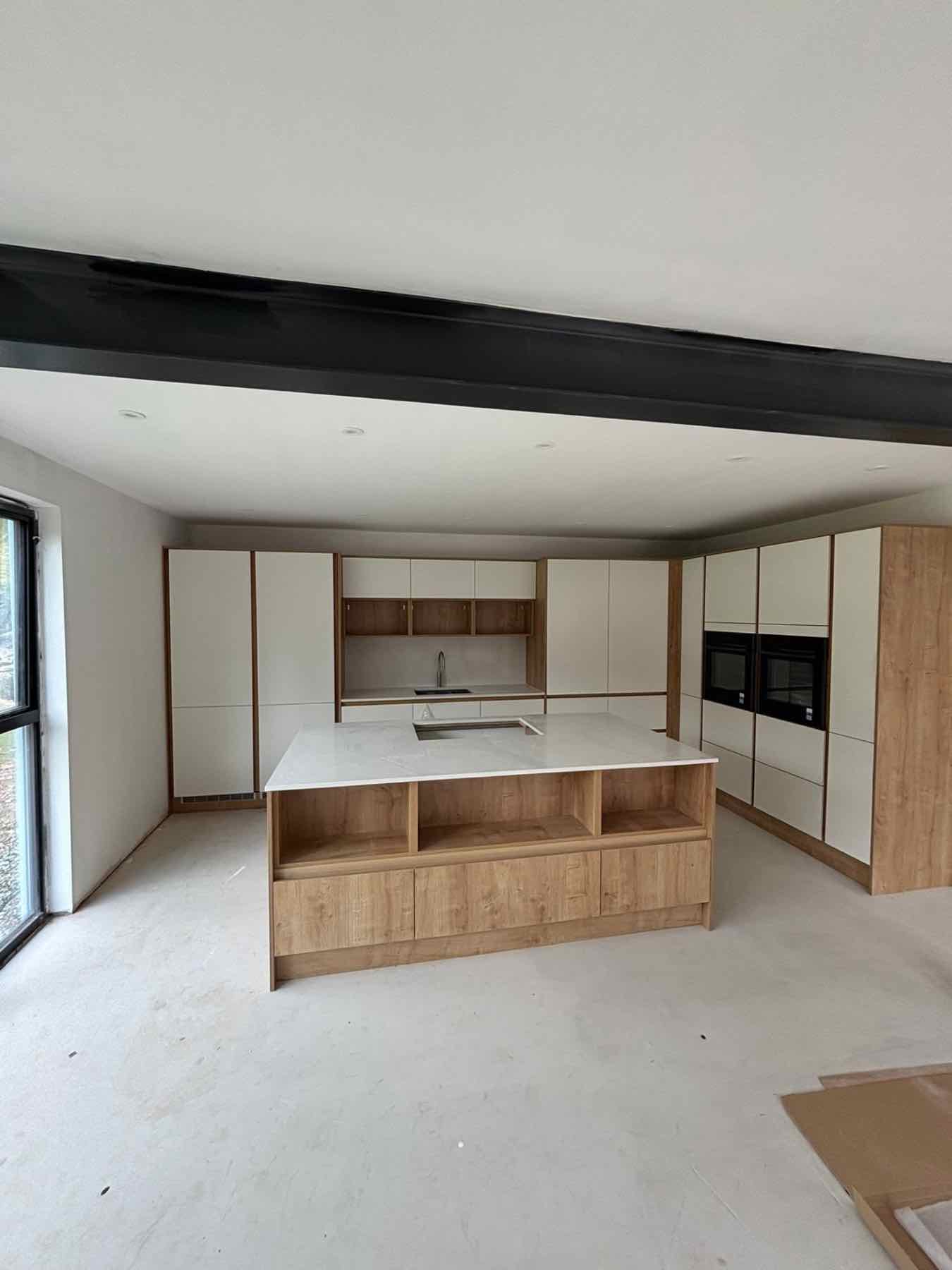
Renovations
Full property refurbishments, including period and listed cottages.
View service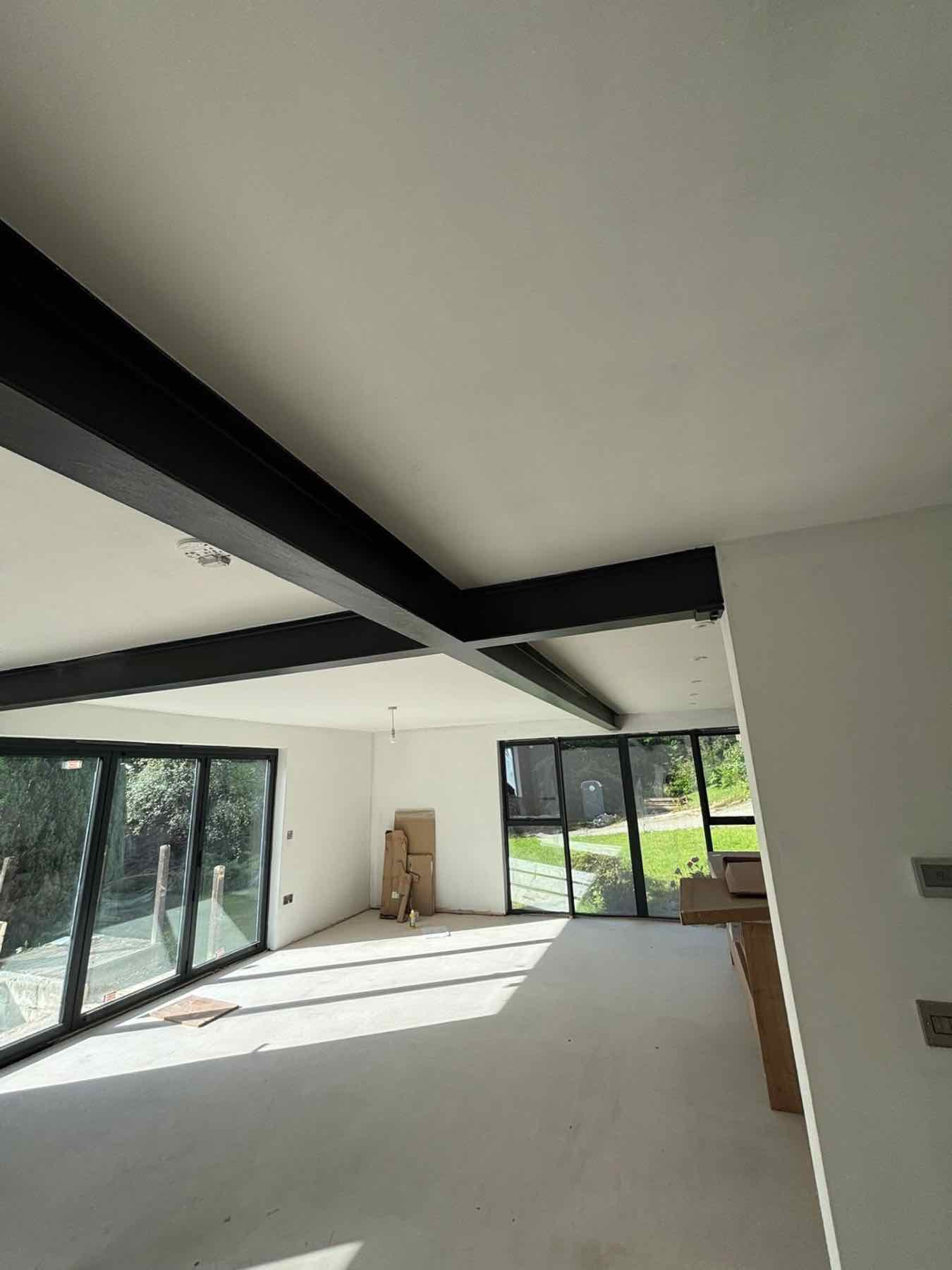
Structural Alterations
Wall removals and openings, designed with our structural engineer.
View serviceWhere we work
Carpentry across North Devon
Next step
Get a free estimate for your carpentry project
Whether it's first and second fix on an extension, a renovation, or structural timber work within a larger project, tell us what you need and Adam will give you an honest, no-obligation estimate.
£5m public liability · £10m employers' liability · 12-month no-quibble workmanship guarantee